
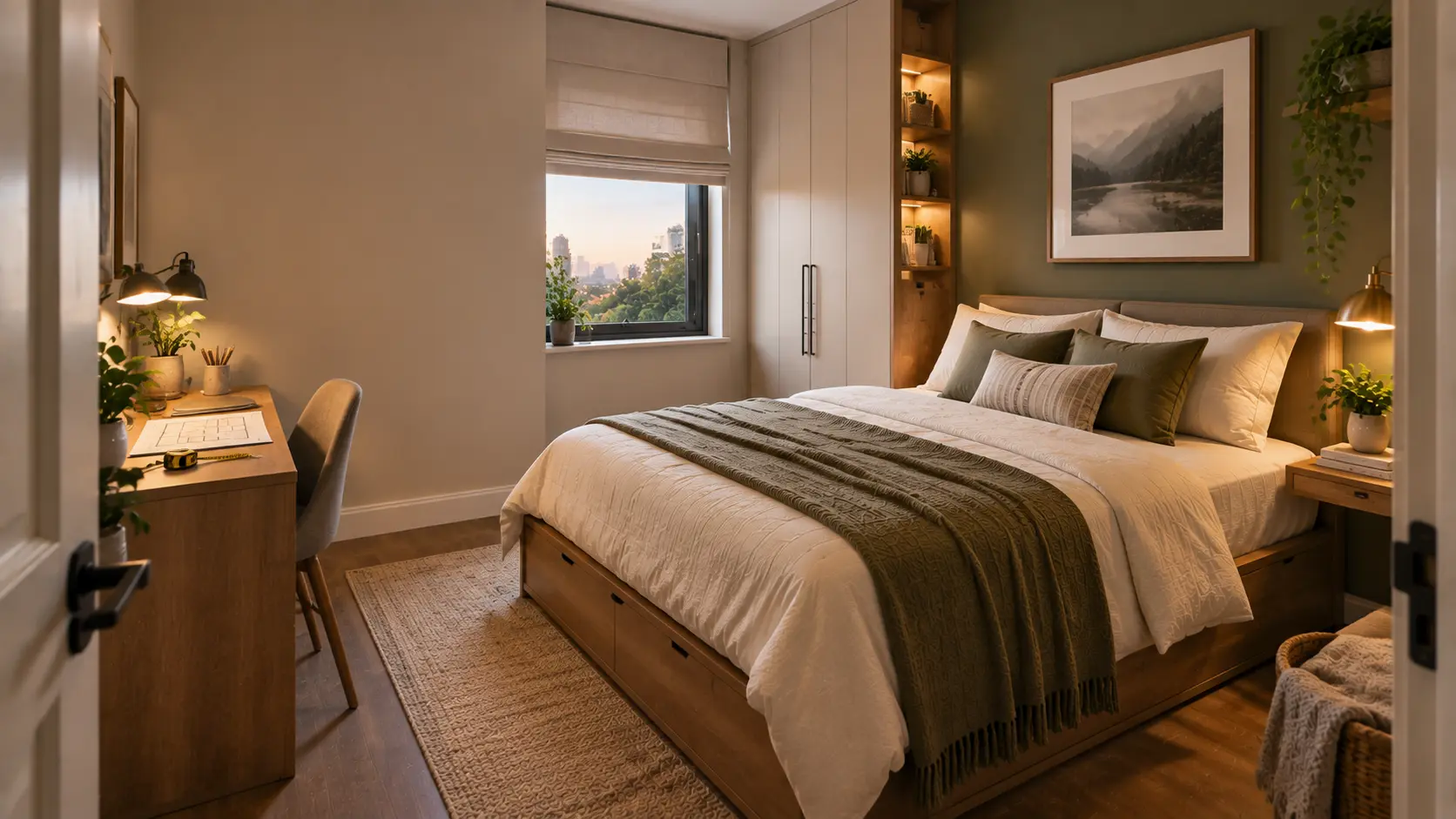
How to Organize Furniture in a Small Bedroom Without Making It Feel Crowded
A small bedroom does not become difficult because of its size alone. The real challenge is making different pieces of furniture work together without turning the room into a narrow path between objects.
Many small bedroom layouts online look effortless because they show the final picture, not the decisions behind it. You see the bed, wardrobe, desk, and decoration, but you do not see whether the wardrobe door hits the bed, whether there is enough space to make the bed, or whether the room still feels comfortable when it is being used every day.
The best furniture arrangement is not the one that fits the most items. It is the one that allows the room to support your routine without creating small frustrations.
Table of Contents
Start With The Space You Need To Move, Not The Furniture You Need To Fit
When organizing a small bedroom, most people immediately start with the largest item: the bed. Since it takes up the most floor space, it feels like the obvious first decision.
However, the bed should not be placed in isolation. Before deciding its position, look at the paths you use every day.
Think about entering the room, opening your wardrobe, getting dressed, reaching the window, and walking around the bed at night. These movements create invisible routes through the bedroom, and furniture placement should protect those routes.
A common mistake is creating a layout where everything technically fits but daily movement becomes uncomfortable. A wardrobe may be placed perfectly against a wall, but if opening its doors blocks the only walking path, the room will constantly feel restricted.
In a small bedroom, empty walking space is not wasted space. It is what allows the furniture you already have to function properly.
Measure Furniture By How It Works, Not Only By Its Size
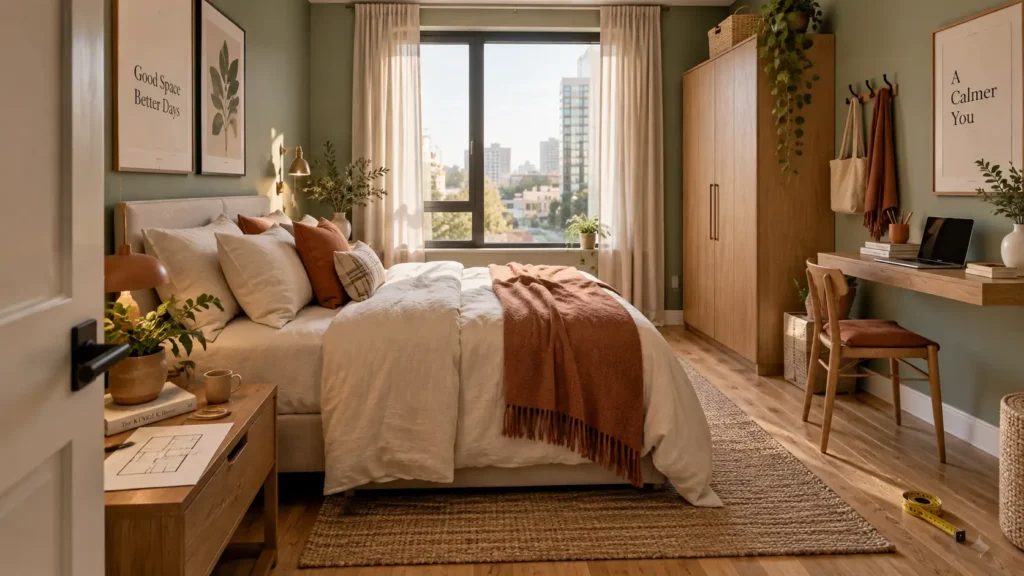
One of the easiest mistakes in a small bedroom is measuring furniture as if it only occupies its physical dimensions.
A wardrobe that is 60 centimeters deep does not only take 60 centimeters of space. It also needs enough room for someone to stand in front of it and open the doors comfortably.
A desk does not only need space for the tabletop. The chair needs room to move, and you need enough distance to sit without blocking another part of the room.
The same applies to beds. A larger bed may fit against a wall, but it can change the entire feeling of the room by reducing access to storage, windows, or other furniture.
Before adding or moving anything, think about the “working space” around each item. Furniture is not just an object sitting in the room; it changes how the room behaves.
Let The Room’s Limitations Decide The Layout
Every bedroom has fixed elements that influence furniture placement.
A door that opens inward, a window that needs access, a built-in closet, or an awkward corner can completely change what works.
This is why copying a bedroom layout from another room often creates disappointment. A beautiful arrangement in one space may depend on details that do not exist in yours.
For example, a centered bed with matching nightstands may look balanced in a large bedroom. In a smaller room, shifting the bed slightly toward one side may create enough space for better storage or a more comfortable walking path.
A practical layout does not always follow perfect symmetry. Sometimes the best arrangement is the one that accepts the room’s limitations and uses them intelligently.
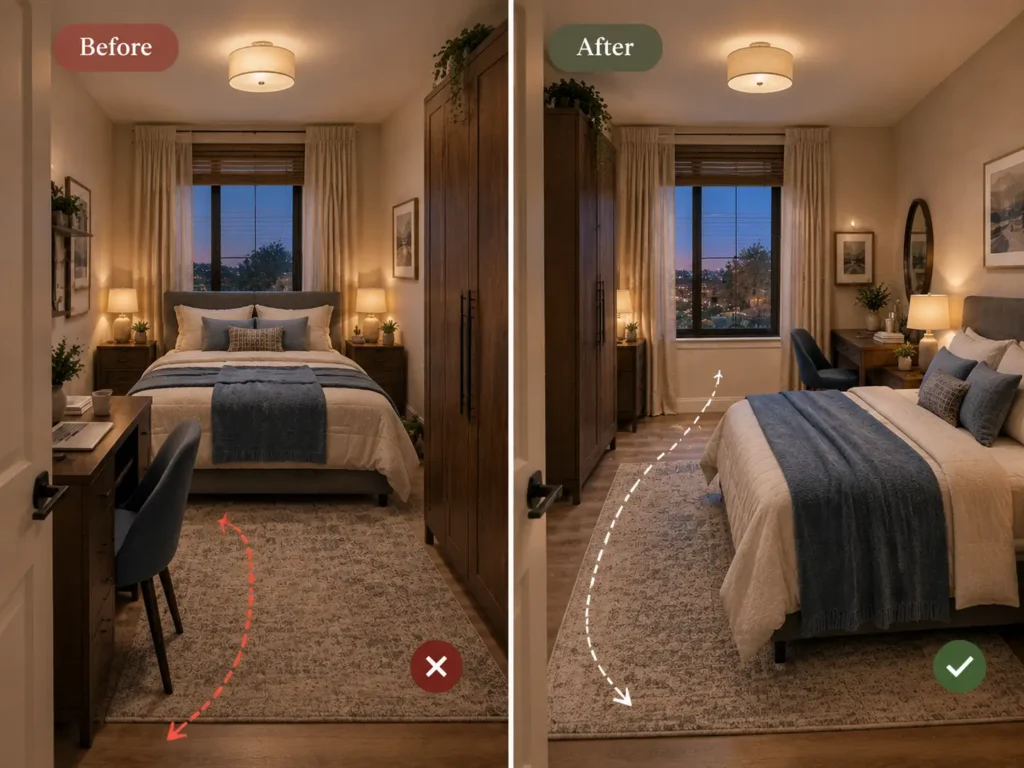
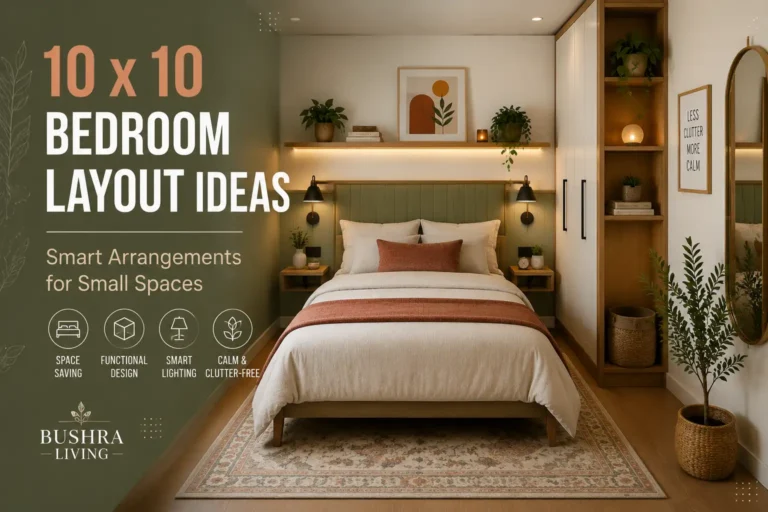
If you are working with a specific room size, such as a 10×10 bedroom, the layout decisions become even more important. Our guide on how to arrange a 10×10 bedroom explores practical layouts for making a compact room feel balanced.
Give Every Piece Of Furniture A Clear Purpose
Small bedrooms often become crowded because furniture is added without considering what role it actually plays.
A chair may look attractive in an empty corner, but if it has no real purpose, it often becomes a place where clothes and random items collect.
A bedside table may look traditional, but if it only holds decoration, a floating shelf or slimmer alternative may create more useful space.
A desk may seem necessary, but if it is rarely used, it may be taking away valuable room from something more important.
Before placing furniture, ask what each item contributes.
Does it improve storage?
Does it support a daily habit?
Does it make the room easier to use?
A small bedroom works better when every piece earns its place.
Avoid Creating Storage That Makes The Room Feel Busier
Storage is important in small bedrooms, but adding more storage is not always the answer.
A room can have enough storage and still feel crowded if too many items remain visible.
Open shelves filled with different objects, multiple small organizers, and overflowing surfaces create visual noise. The problem is not that the room lacks organization; it is that the eye has too many things competing for attention.
A better approach is to think about what needs to be accessible and what can stay hidden.
For example, daily essentials should be easy to reach, while less-used items can be stored away. Furniture that combines functions, such as a bed with built-in storage, can reduce the need for extra pieces.
The goal is not to maximize storage capacity. The goal is to create a room that feels easier to maintain.
Test The Layout Before Moving Everything Permanently
A furniture arrangement can look perfect on paper and still feel wrong when you start living with it.
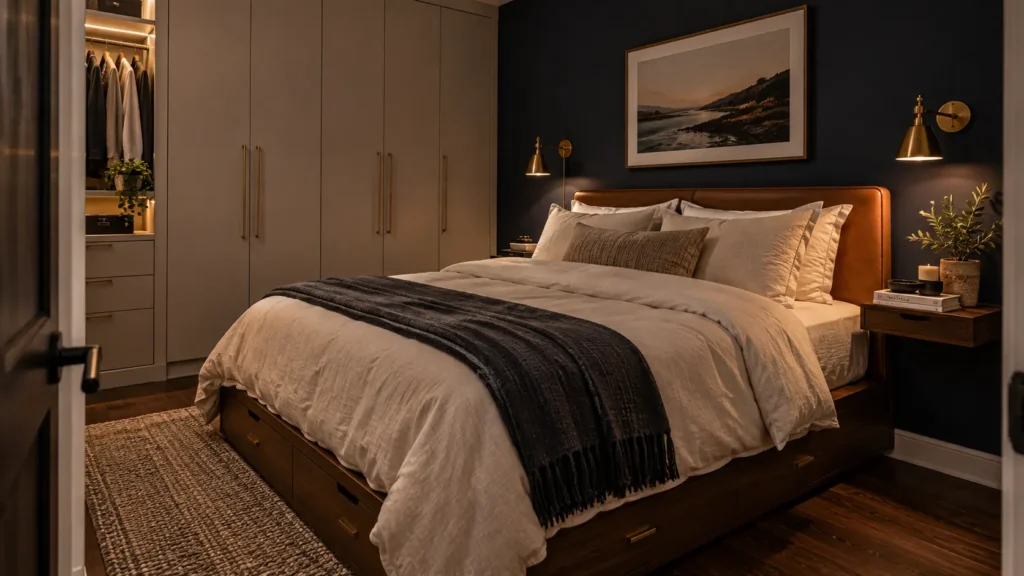
Before making major changes, test the layout in simple ways.
Use tape to mark the size of furniture on the floor. Walk through the room at different times of the day. Open imaginary wardrobe doors. Sit where the desk or chair would be placed. Notice whether anything feels inconvenient.
These small tests reveal problems before you spend money or spend hours moving heavy furniture.
A good layout should not only look organized when the room is empty. It should feel natural when you are using it.
Frequently Asked Questions
What is the first thing to consider when arranging furniture in a small bedroom?
Start with movement and daily routines rather than furniture placement. The best layout protects walking paths and makes everyday activities easier.
Should the bed always go against a wall in a small bedroom?
Not always. Placing the bed against a wall often saves space, but the best position depends on doors, windows, storage, and how the room is used.
How can I make a small bedroom feel less crowded?
Focus on reducing unnecessary furniture, improving movement space, and controlling visible clutter. A room often feels larger when it has fewer competing elements.
Is it better to have more storage in a small bedroom?
More storage is not always better. The right storage reduces visible clutter without taking away useful floor space.
Final Verdict
Organizing furniture in a small bedroom is not about finding one perfect arrangement that works for every room. It is about understanding how your specific space is used and making choices that support everyday life.
The strongest layouts usually come from simple decisions: protecting movement, choosing furniture carefully, and avoiding pieces that create more problems than they solve.
A small bedroom does not need to feel limited. It needs furniture that works together.
Written by Bushra
At Bushra Living, we explore home ideas by looking beyond how a room appears in a photograph. For small spaces especially, we focus on the relationship between furniture, movement, storage, and everyday habits. This guide was created by studying common layout challenges and finding practical ways to make compact bedrooms feel more comfortable, balanced, and easier to live in.

One Comment