
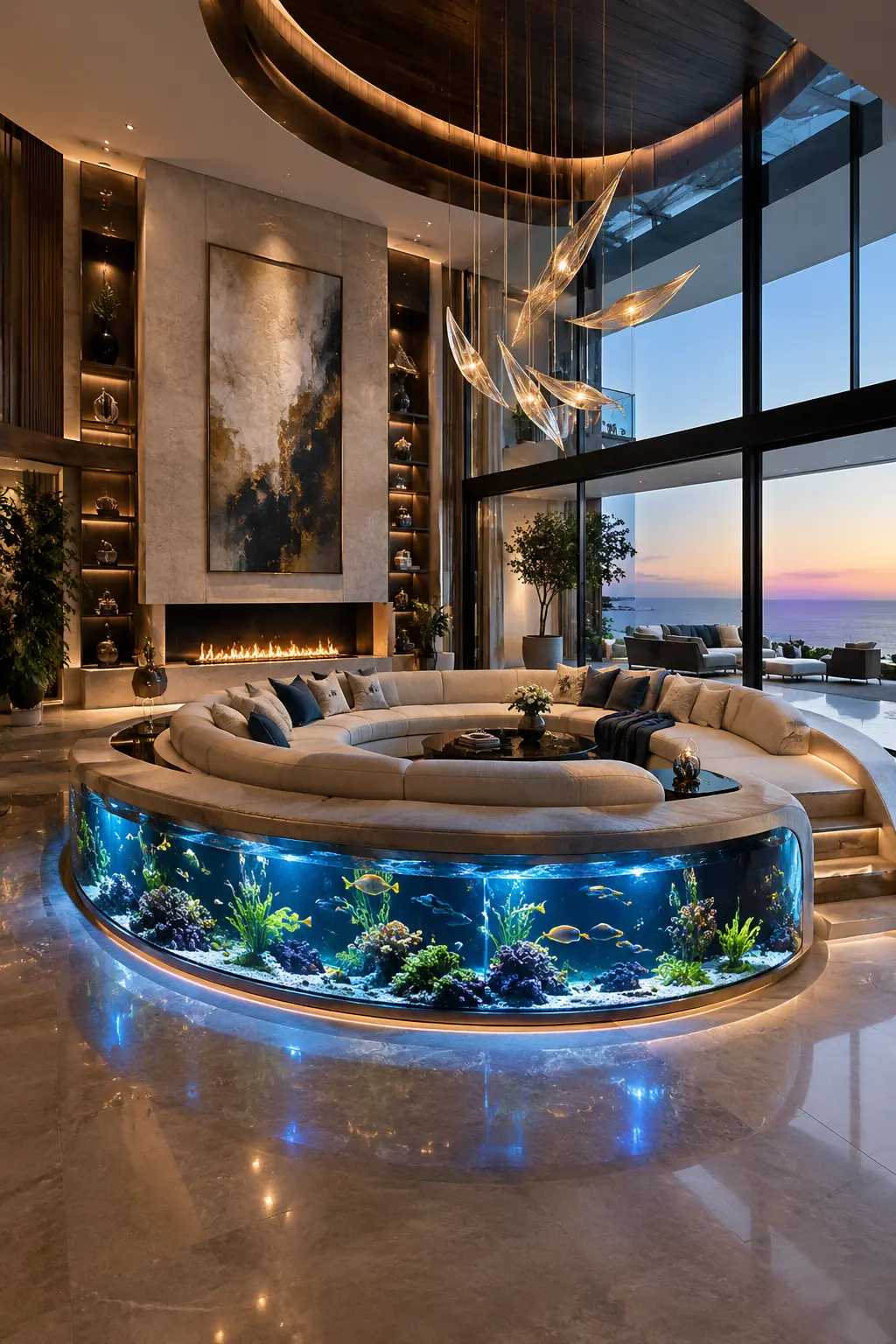
How to Design a Luxury Living Room – 10 Ideas
If you want to learn how to design a luxury living room, don’t start by filling the space with expensive furniture and shiny accessories.
A luxury living room usually looks expensive for a much simpler reason: the room feels intentional.
The sofa has the right proportions. The lighting creates atmosphere. Materials have depth. The furniture has breathing room. Even the smallest details feel like they belong there.
You can create that feeling without making the room look like a hotel lobby or a furniture showroom. The goal is to create a space that feels refined but still comfortable enough actually to live in.
Here are the design decisions that make the biggest difference.
1. Get the Furniture Scale Right
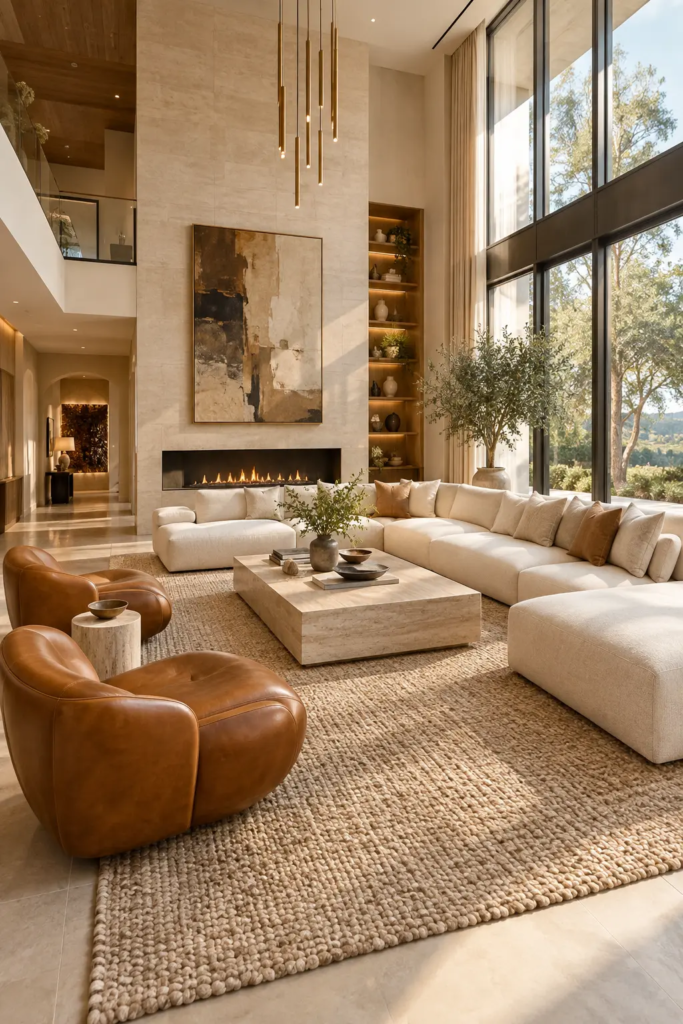
Furniture can be beautiful and still look wrong in a room if the proportions aren’t right.
Before buying anything, measure the available space.
A large living room usually needs substantial furniture to prevent it from feeling empty. A smaller room may need fewer pieces with slimmer profiles.
Think about the walking paths too. You shouldn’t have to squeeze between a coffee table and sofa just to cross the room.
A useful approach is to create the seating arrangement first and then add secondary pieces around it.
This makes the room feel designed rather than simply furnished.
2. Make Lighting Part of the Design
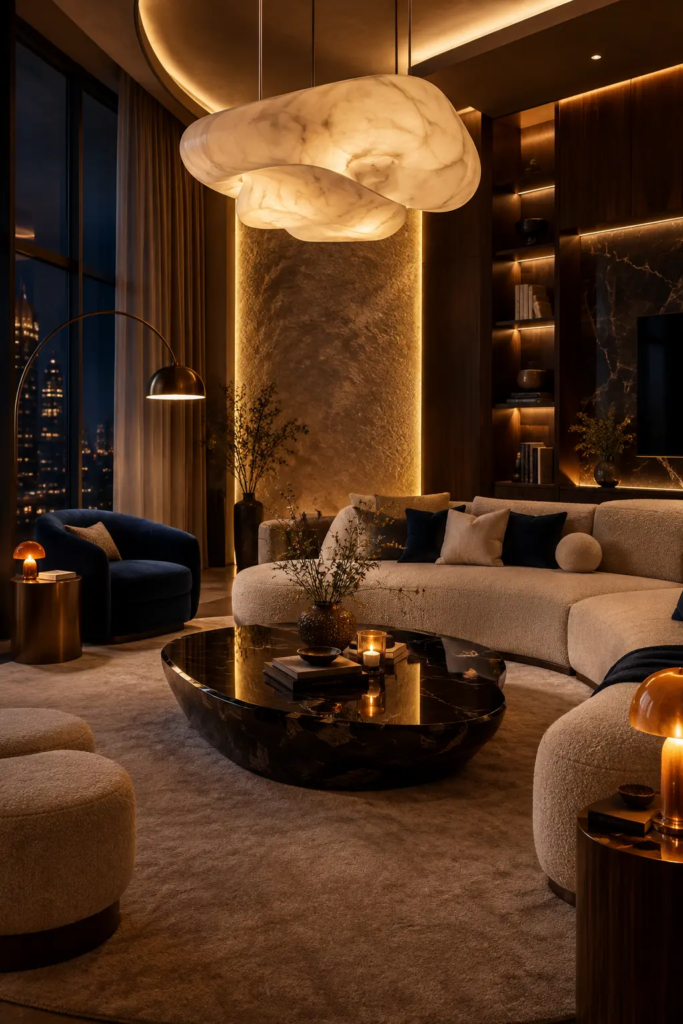
Lighting should be planned before the room is finished, not added as an afterthought.
Use several types of lighting instead of relying on one ceiling fixture.
For example, you could combine concealed architectural lighting with a statement pendant, table lamps, floor lamps, and small accent lights.
The room should have different levels of brightness.
During the day, natural light can take the lead. In the evening, warmer low-level lighting can make the same room feel completely different.
This is especially important if you want the room to feel luxurious at night.
3. Make the Seating Island an Underwater World
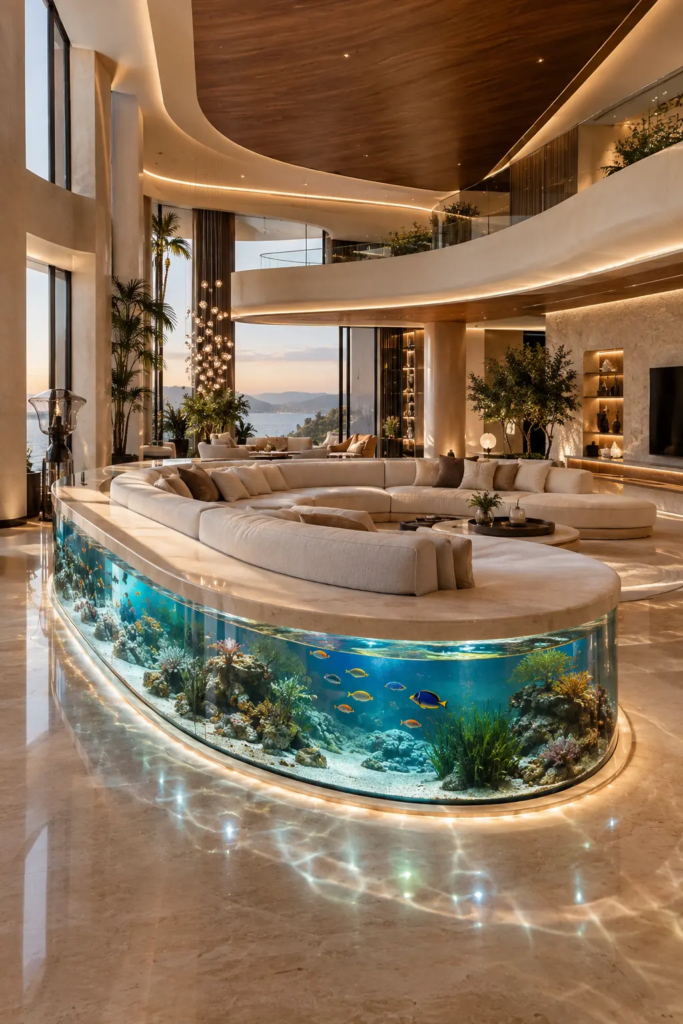
Why hide the most spectacular feature against a wall?
Create a large sculptural seating island in the center of the living room and integrate a curved aquarium directly into its architectural base.
Imagine an oversized cream sectional wrapping around a crystal-clear aquarium filled with elegant tropical fish, underwater plants, sculptural coral, and subtle blue illumination.
From the seating area, the aquarium becomes part of the room rather than something sitting beside the furniture.
For an even more sophisticated look, keep the surrounding palette quiet—travertine, warm plaster, walnut, and soft cream—so the water becomes the unexpected visual centerpiece.
4. Put a Private Water Garden Beneath the Floor
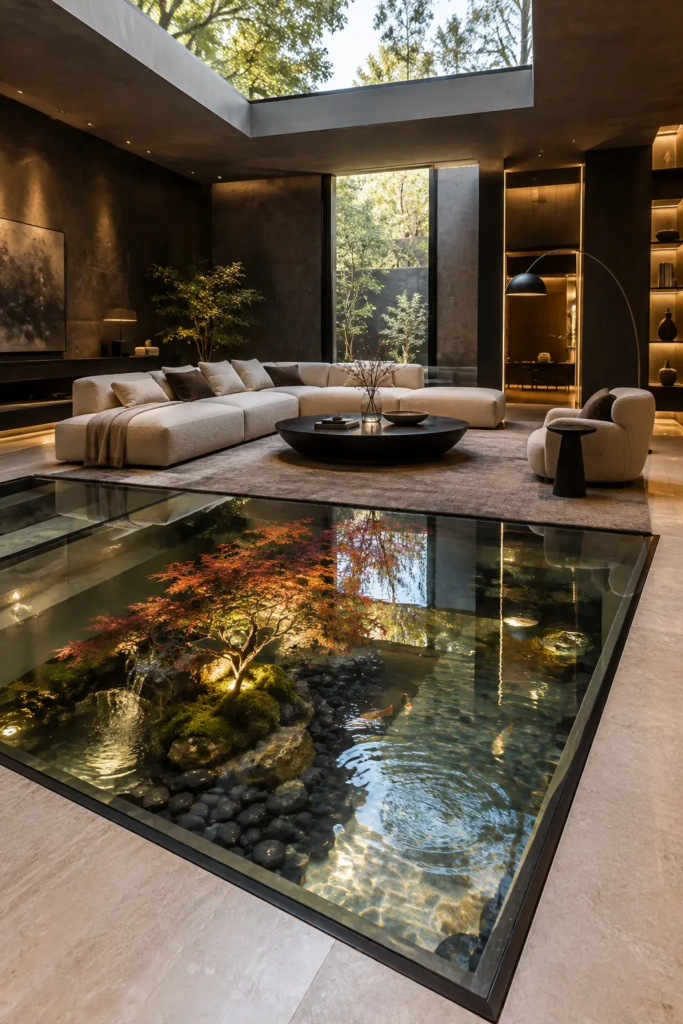
A luxury living room can have a secret underneath it.
Instead of treating the floor as a simple surface, replace one carefully planned section with structural glass.
Below it, create a shallow Japanese-inspired water garden with smooth river stones, aquatic plants, soft underwater lighting, and slow-moving water.
The result is almost surreal—you can stand in the living room and look directly into a peaceful miniature landscape beneath your feet.
Use this sparingly. One dramatic glass opening is far more luxurious than covering the entire floor in glass.
5. Turn the Fireplace Into a Hidden Room
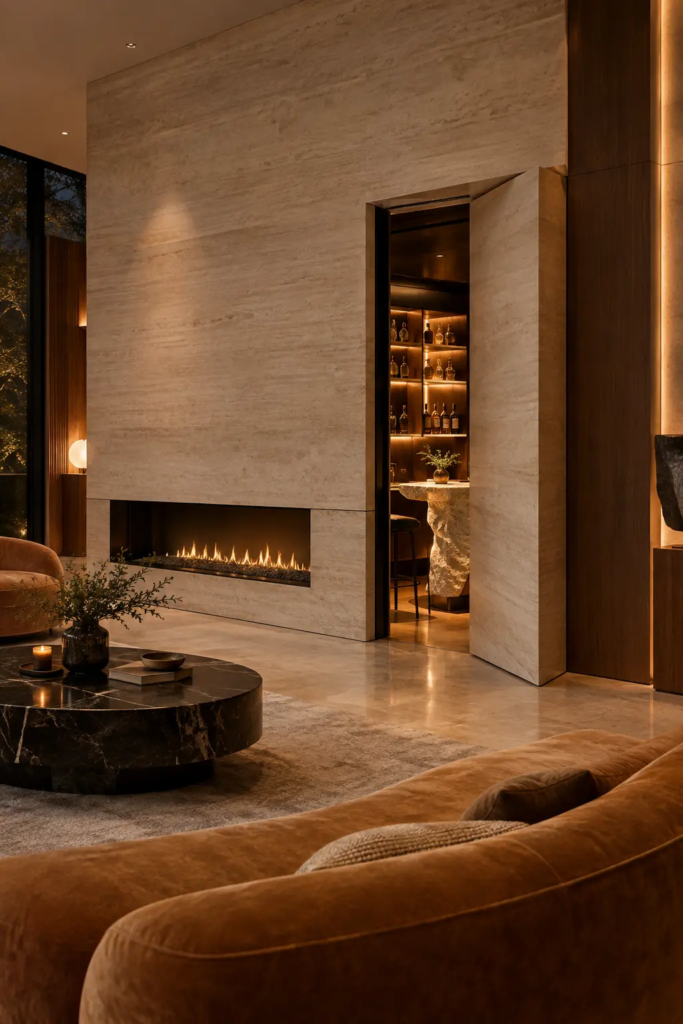
A fireplace doesn’t have to be just a fireplace.
Design an enormous stone fireplace wall with a concealed pivoting section.
When closed, it looks like a beautifully finished architectural feature. When opened, it reveals a completely hidden lounge behind it—a tiny bar, wine room, library, or private reading space.
This works especially well in large luxury homes because the secret isn’t immediately obvious.
Keep the hidden doorway flush with the surrounding stone or plaster so there are no obvious handles or hinges.
6. Create a Sunken Lounge Surrounded by Water
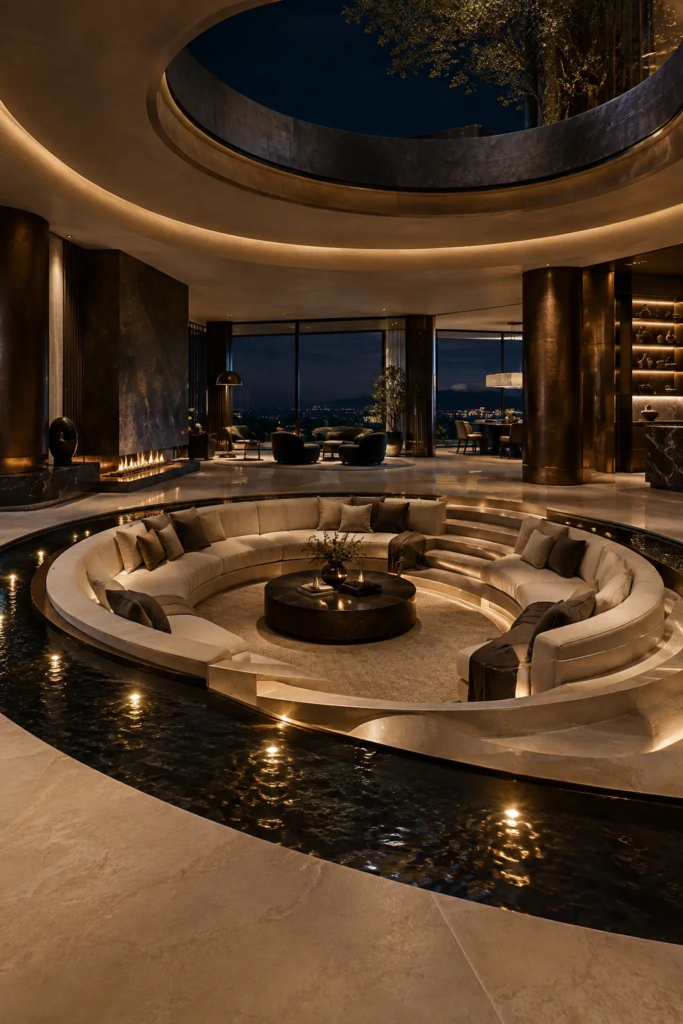
Instead of placing the sofa on the floor, lower the entire conversation area.
Create a circular sunken lounge several steps below the main floor, then place a very narrow illuminated water channel around its perimeter.
The water doesn’t need to be deep. Its purpose is visual.
When the room is softly illuminated at night, the water creates a glowing boundary around the seating area, making the lounge feel like a private island.
This works particularly well in open-plan homes where you want the living room to feel like a separate destination.
7. Let an Indoor Tree Become the Architecture
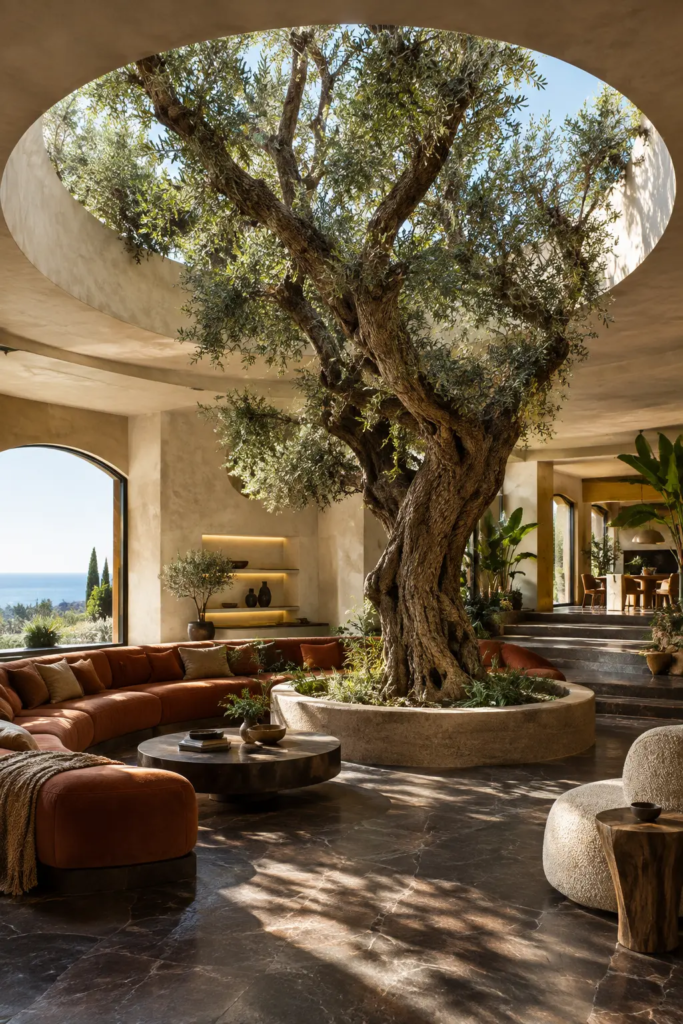
Forget a small decorative plant in the corner.
Bring a mature sculptural tree into the actual architecture of the living room.
Build the seating arrangement around its trunk and allow the branches to rise through a circular opening in the ceiling toward a skylight.
The tree becomes more than decoration. It becomes the reason the room is arranged the way it is.
Choose a species with an interesting trunk and sculptural branching pattern rather than simply choosing the largest plant available.
8. Use a Ceiling That Looks Like Moving Water
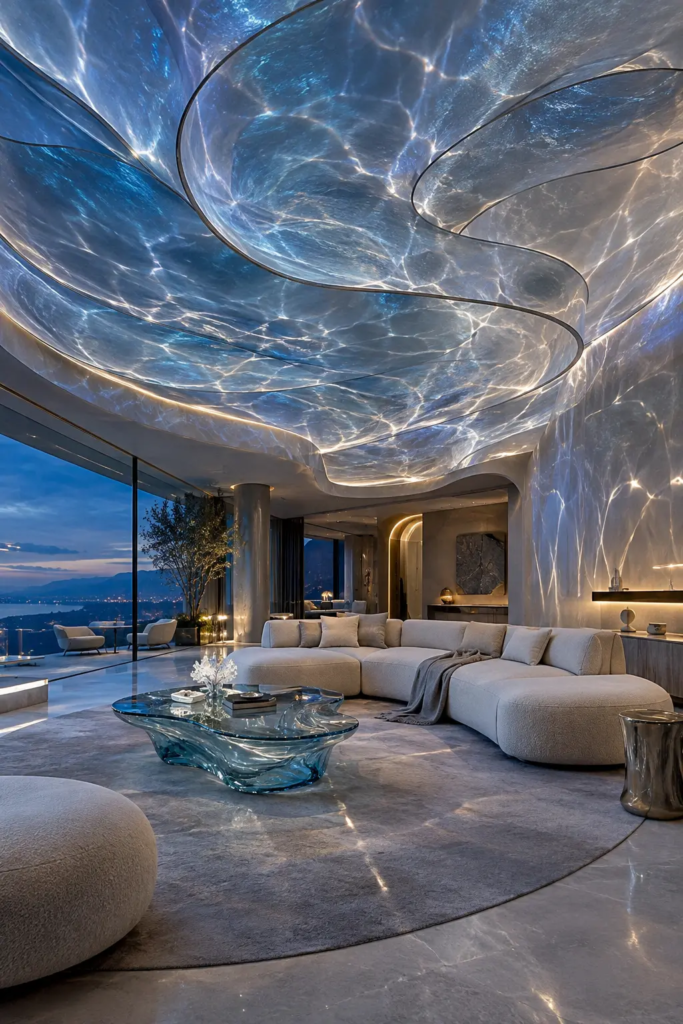
Most living room ceilings are completely forgotten.
That’s exactly why this idea can be so powerful.
Create a recessed ceiling installation with a translucent sculptural surface that catches programmable light and creates the visual impression of slow-moving water.
The effect should be subtle rather than resembling a nightclub.
During the day, it can look like an elegant architectural ceiling. At night, soft shifting reflections can transform the entire room.
Pair it with restrained furniture so the ceiling remains the star.
9. Build an Indoor Waterfall Behind the Sofa
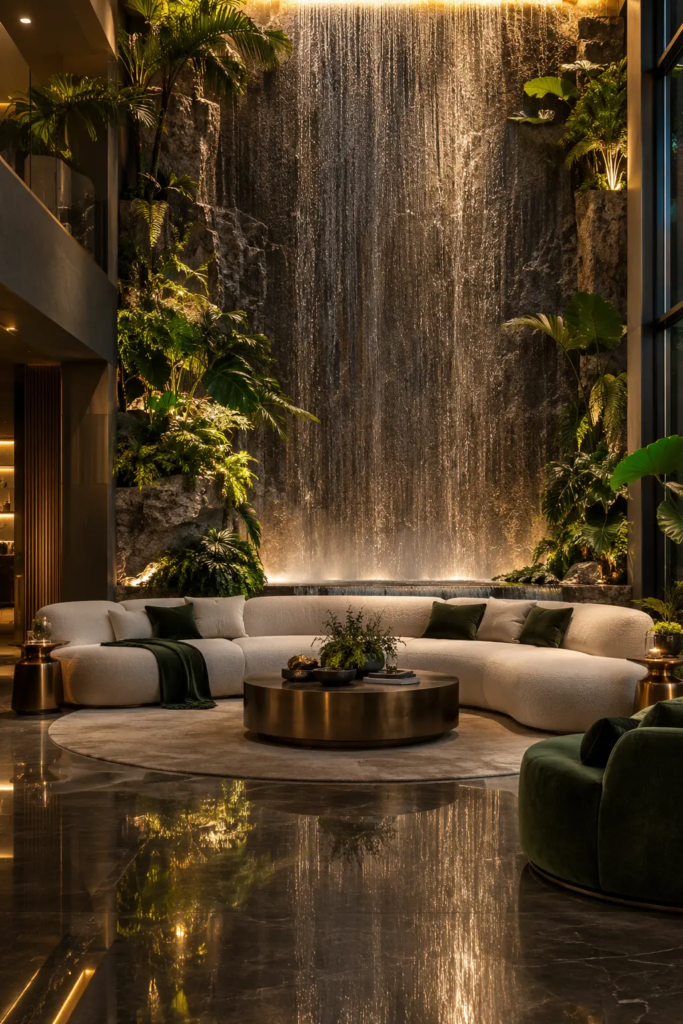
A water feature can become the backdrop rather than an accessory.
Install a full-height stone wall behind the sofa with an extremely thin sheet of water flowing continuously down its surface.
Use dark stone, textured limestone, or another naturally patterned material so the water enhances the surface rather than hiding it.
Add carefully concealed lighting beneath the water line and around the edges.
The sound of moving water also gives the room a completely different atmosphere.
10. Turn the Staircase Into a Living-Room Sculpture
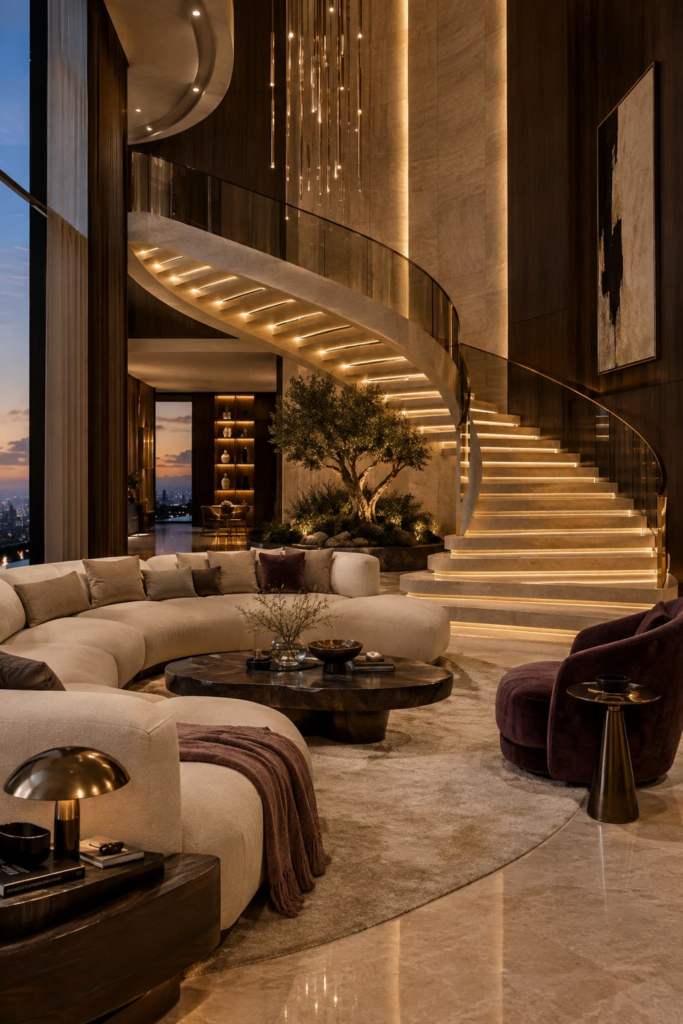
If the staircase enters the living room, don’t treat it as a separate practical element.
Make it part of the visual composition.
A sweeping floating staircase with sculptural curves can rise behind the seating area, almost like a piece of art.
Use unusual materials such as creamy stone, smoked glass, dark wood, or translucent resin.
Integrated lighting beneath the treads can make the staircase appear to float at night.
How to Make These Luxury Ideas Actually Work
The biggest mistake would be trying to use several of these concepts in one room.
You don’t need an aquarium plus waterfall plus glass floor plus dramatic fireplace.
Choose one major architectural experience.
Then keep everything else relatively quiet.
For example, if you choose the aquarium island, let the water provide the color and movement. Use restrained stone, wood, and upholstery around it.
If you choose the hidden bar, keep the main room elegant and understated so the surprise is revealed only when the wall opens.
If you choose the sculptural cave concept, don’t fill the space with accessories. Let the architecture itself provide the drama.
That balance is what separates luxury from simply expensive-looking.
Final Thoughts
When deciding how to design a luxury living room, don’t ask only which furniture looks expensive.
Ask what someone will remember five minutes after leaving the room.
A spectacular aquarium hidden inside a seating island. A secret room behind a fireplace. A water garden beneath transparent flooring. A mature tree passing through the ceiling.
Those are the details that turn a beautiful living room into an experience.
The smartest approach is to choose one unforgettable feature, build the room around it, and allow everything else to support it.
That’s where true luxury starts to feel personal rather than predictable.
One Comment